August Newsletter
This Month in Inclusive Leadership
In this issue, we reflect on insights from our eight-week Mindfulness Summer Series and share what’s ahead, including an upcoming Spring 2026 mindfulness cohort with executive coach Trymaine Gaither. We also highlight details on the November Employee Resource Summit, where leaders and ERG practitioners will co-create strategies for inclusion and innovation. Additional features dive into Seattle’s lawsuit defending DEI and LGBTQ+ protections, the urgent need for inclusive workforce policies, UC Berkeley’s guide to building belonging, and a reframing of public discourse on vaccinations. Explore the full articles below and stay connected to the conversations shaping today’s workplaces and communities.
LET’S PICK UP THE PACE TOWARD PROGRESS
As summer draws to a close and the mornings begin to carry a hint of autumn crispness, I find myself reflecting on what we have achieved together at the midpoint of our Commitments to Progress coalition. This season of transition feels like the perfect time to both honor our collective efforts and set our sights on what lies ahead.
I want to extend deep gratitude to those who completed our mid-point coalition survey. Your insights are vital—they shape priorities, sharpen our strategies, and guide how WE’RE can best support your organizations as we advance shared progress through 2030. I am equally encouraged by the early interest in the 2026 Leadership Development Program cohort and excited to continue partnering with you in elevating the crucial conversations that reflect our shared values.
Looking forward, we have a powerful lineup this fall: new opportunities to support Employee Resource Groups, preparations for next year’s Supplier Engagement Conference, and the inaugural Health Inclusion Summit in early 2026. These moments are not just events; they are platforms to deepen our impact and strengthen the collective voice of equity and inclusion across industries.
Now, more than ever, sustaining your commitments matters. The work is not easy, and the headwinds are real—but by standing together with courage, persistence, and focus, we can accelerate progress toward the future we know is possible.
I invite you to stay engaged—whether by joining a task force, contributing to planning circles, or simply sharing 1:1 insights. Your voice and your persistence are what make this coalition strong.
Onward,
Shirline

Mindfulness: Reflecting on Our Summer Series & What’s Next
Over the past eight weeks, this series invited professionals across our coalition to slow down, reset, and recalibrate their leadership from the inside out. Guided by executive coach Trymaine Gaither, we explored mental clarity training not as a wellness perk, but as a research-backed strategy for navigating high-stakes environments with greater focus, resilience, and emotional intelligence. From setting boundaries and preventing burnout to aligning with purpose and leading from wholeness, each edition delivered actionable tools for real-time leadership.
The core takeaway? Mindfulness isn’t about escaping demands or avoiding reality: it’s about meeting them with presence, steadiness, intentionality, and integrity. Leaders who cultivate internal clarity make sharper decisions, build stronger relationships, and sustain their energy and impact over time. Whether you adopted a Monday ritual, redefined a boundary, or simply took a deeper breath, your commitment to conscious leadership matters, and its ripple effect will extend well beyond this season.
Looking Ahead: A Deeper Dive into Mindfulness This Spring
We’re excited to share that WE’RE is prepared to offer a hybrid 8-week mindfulness cohort in Spring 2026, led once again by the incredible Trymaine Gaither. This immersive program will integrate leadership development with practical mindfulness techniques, tailored for professionals who want to sharpen focus, reduce burnout, and lead with greater authenticity and intention.
Interested in joining this experience?
Email lauren@employers4equity.org to express your interest. Space will be limited, and we’d love for you to be among the first to know when registration opens.
Here are the archives of this summer series: https://were.madebyhnw.dev/mindfulmondays
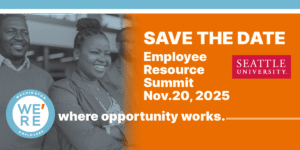
WE’RE Employee Resource Summit: Friday, November 14, 2025
We are pleased to share that the coalition will host an Employee Resource Summit this November, designed to bring together leaders, practitioners, and employees engaged in ERGs and inclusion efforts across our member organizations. This convening will serve as both a learning space and a catalyst for innovation, responding directly to the evolving needs of today’s workplace culture.
The Summit agenda has been shaped by member feedback collected earlier this month. Participants told us they want ideas that engage across ERGs and departments, programming that is intersectional and inclusive, and opportunities for leadership development and personal emotional intelligence growth. They also expressed interest in more tactical insights, particularly around succession planning, culture-shifting strategies, and innovation while noting the need to explore how ERGs continue to evolve in the post-COVID landscape. As one member reflected, “The landscape for employees and belonging has shifted… I’ve witnessed very little innovation in the ERG space and think it’s a real mystery as to why.”
When asked about priorities, respondents ranked leadership development, allyship and advocacy, and community building as their top areas of focus. Other key interests included mental health and wellbeing, career advancement, intersectionality and inclusion, and ERG strategy and impact. Taken together, the data shows that members value connection and professional development equally, and want tools that are actionable, measurable, and responsive to the realities of today’s organizations.
To meet these expectations, the Summit will feature formats that emphasize dialogue, peer learning, and co-creation. Roundtable discussions and panel conversations will anchor the agenda, complemented by interactive workshops and keynote speakers. Together, these formats will create a dynamic space where ERG leaders and allies can connect, learn from one another, and chart innovative pathways forward. We are excited to share more details soon and look forward to engaging our coalition in this important gathering. If you’d like to stay informed, sponsor a session, or contribute to the planning of the ERG summit, please contact lauren@employers4equity.org.

Seattle Files Lawsuit to Defend DEI and LGBTQ+ Policies
Seattle is taking bold legal action against the Trump administration to protect its commitment to diversity, equity, inclusion and gender identity policies. Seattle Mayor Bruce Harrell and City Attorney Ann Davison spoke to City Hall and have filed a lawsuit challenging two recent executive orders “Over Ending Illegal Discrimination and Restoring Merit‑Based Opportunity” and “Defending Women from Gender Ideology Extremism”which Seattle argues threaten to strip essential protections and block federal funding for programs that align with the city’s values.
The city estimates that these executive orders pose a risk to approximately $370 million in federal funds that have already been allocated to critical programs across transportation, housing, and public safety, including corridor projects. Seattle’s leadership characterized this as a coercive attempt to dismantle locally guided policies by leveraging essential funding and bypassing democratic processes. City Attorney Davison framed the lawsuit as a defense of constitutional checks and balances, noting, “There are limits to presidential authority … federal law is not made by one person’s edicts.”
Beyond the financial stakes, the lawsuit represents a line in the sand for quality of life, safeguarding, and advancing inclusive policymaking. Seattle cites a long-standing record of equity and human-rights progress, from early transgender protections to groundbreaking racial justice initiatives, and sees these legal actions as efforts to preserve both community well‑being and institutional integrity. As Mayor Harrell emphasized, “When Trump unlawfully tries to withhold critical federal funding by attacking access to opportunity and our LGBTQ+ community, we will pursue every avenue to protect our people and our priorities.”
This lawsuit is part of a broader national resistance to sweeping federal attempts to roll back DEI and gender recognition efforts. Multiple lawsuits including those from civil rights and advocacy group are challenging similar executive orders across the country. Seattle’s case, filed in the Western District of Washington, is now among several high-stakes legal battles seeking to preserve inclusive leadership and protect funding already earmarked through democratic channels.

The Stakes Are Clear: Why Inclusion Work Matters Now More Than Ever
Recent labor force data underscores the urgent need for continued commitment to inclusion practices in the workplace. In the past three months alone, 300,000 Black women have left the U.S. labor force, a staggering shift that cannot be dismissed as chance. As MSNBC Business Culture reports, “This isn’t a coincidence. It’s the result of federal policy choices; from slashing DEI to gutting education and health jobs, sectors where Black women lead.” The consequences ripple far beyond individuals: “Every one-point drop in women’s labor force participation costs the U.S. economy an estimated $146 billion in lost GDP. … When Black women are pushed out of the labor force, we all lose.”
The inequities are stark. Between February and April 2025, Black women lost 318,000 jobs, even as the overall economy added jobs. Wage gaps remain profound, with Black women earning just $0.64 for every $1 paid to white, non-Hispanic men, and only $0.44 on the dollar for Black breadwinner mothers. Meanwhile, women’s goods are rising in price nearly three times faster than men’s, compounding the economic pressure. This reality should sound the alarm for employers, policymakers, and all who believe in building a fair and sustainable economy.
At the same time, many corporate leaders are signaling that stepping back from DEI is not the answer. “DEIA isn’t illegal, and it’s not going anywhere,” notes Jon Hyman of Impactivize. “Companies that back away from DEIA out of fear or misinformation aren’t protecting themselves, they’re setting themselves up to fall behind.” Rob Davis, CEO of Merck, adds, “Our company has a longstanding commitment to diversity and inclusion. It’s at the core of who we are, our values, and how we operate as a company. It’s also a strategic imperative.” Leaders across industries are affirming that inclusion is not only morally right but essential to competitiveness, innovation, and trust.
As Jennifer McCollum, CEO of Catalyst, put it plainly: “Inclusion has never been a liability – it’s a competitive advantage and a business imperative.” For members of the WE’RE coalition, these findings and commitments reinforce why our shared work matters. The path forward requires courage, accountability, and collaboration to ensure that Black women and all historically marginalized employees can thrive. As the data makes clear: the costs of inaction are too great, and the rewards of equity are shared by all. Suggestions for a policy reset are included at the conclusion of the MSN Business Culture report.

UC Berkeley Resource: Belonging, Built Brick by Brick
There are moments in American life when the ground seems to shift beneath our feet, when familiar words sound weary from overuse, their promise eroded by backlash and budget cuts. And yet, if you listen closely, you can still hear something steady underneath the noise: the human desire to belong.
That simple yearning is what the University of California, Berkeley’s Othering & Belonging Institute tries to capture in its new “Resource Guide for Belonging‑Builders.” Far from another glossy pamphlet, the 36‑page manual reads like a set of blueprints for rebuilding the house we all live in, one designed, at last, for every occupant. “Belonging is not just about who is included,” the guide reminds us, “but about how we build systems where everyone co‑creates the future.”
Those are ambitious words, and they land in a season of skepticism. Corporate equity budgets are shrinking; campus offices of diversity find themselves in the political crosshairs. Yet the Institute argues that belonging is not a feel‑good extra. It is infrastructure. Without it, the roof leaks for everyone.
A Map with Three Landmarks
Targeted Universalism stands first. Picture a destination, all students feel safe in the classroom, all employees feel valued at work. Now chart a route that pays special attention to the travelers left furthest behind: the first‑generation student, the single parent on the night shift, the new hire who sees no one else who looks like her. One map, many lanes.
Next comes Bridging Across Difference. The guide’s authors imagine storytelling circles and cross‑department design sprints, settings where people drop their job titles long enough to trade stories, and in the telling, discover how their lives rhyme.
Finally, there is the Narrative Strategy. A workplace, like a nation, runs on the stories it tells itself. Change the story, who is the hero, who belongs in the frame, and you begin to change the terms of power.
Five First Steps for Leaders
Run a structural equity audit. Numbers alone won’t do; examine who advances, who stays silent, who never makes it into the room.
Apply targeted universalism to hiring and promotion. Tailor support, mentorship, flexible schedules, tuition credits, so the people most likely to fall through the cracks are first to find a handrail.
Build forums that cross silos. Engineers with marketers, faculty with facilities staff. Shared problems, shared solutions.
Let culture speak. Invite employees to curate playlists, rituals, and art that render the workplace less anonymous, more alive.
Name power openly. Ask, without flinching: Who decides? Who benefits? Then widen the circle.
Everyone’s Work, Everywhere
Belonging is not the province of human resources alone. It is the quiet authority of a product designer who ensures an app works for screen‑readers; the syllabus a professor rewrites so every student sees herself in the case studies; the board chair who asks whose voices are missing before calling for a vote.
None of this is quick work. It is patient, iterative, more masonry than miracle. But as the Berkeley guide insists, “When people belong, they help create the structures that govern their lives.” That creation, brick by humble brick, is the business before us now.
And if we lay the foundation well, if we remember that every blueprint carries a human heartbeat, then perhaps the house we build will be large enough, at last, for all of us to call home.

Beyond the Binary: Rethinking Public Discourse Around Vaccinations
Reading the news today, much is being written on vaccinations. Public discourse conversations around vaccinations are often reduced to a simple binary: pro-vaccine or anti-vaccine. This either/or framing not only oversimplifies a complex public health issue but also erodes opportunities for dialogue, trust-building, and systems thinking. As professionals engaged in the health, education, policy, and corporate sectors, it is essential that we move beyond surface-level debates and ask deeper questions that reflect the interconnectedness of our communities.
Vaccinations are not just a matter of personal choice, they are a window into how we care for each other in an interdependent society. When we engage critically and compassionately, we make room for nuance, equity, and long-term impact. Rather than debating yes or no, we can ask broader questions. Here are a few examples of conversation starters.
What systems of trust or distrust influence how different communities make decisions about public health? Trust is foundational in public health. Historical injustices, medical racism, low and disproportionate participation in research, and uneven access to care mean that not all communities approach healthcare and vaccination with the same starting point. For instance, the Tuskegee Syphilis Study involved the deliberate withholding of treatment from Black men without their informed consent, leaving a legacy of justified mistrust toward government health agencies. More recently, the Flint Water Crisis exposed thousands of residents, many of them children in a predominantly Black community, to lead-contaminated water while public officials dismissed early warnings and delayed action. These examples remind us that vaccine hesitancy is not always rooted in misinformation or fear, but often in lived experiences and systemic betrayal. Understanding the “why” behind hesitancy can lead to more inclusive, culturally responsive strategies, noting that individual experiences are not reflected in all experiences.
How do individual health choices impact the collective resilience of a community? Vaccination decisions are often framed as personal. Yet pandemics have reminded us that health is deeply collective. Critical thinking invites us to weigh individual autonomy alongside our shared responsibility to protect the vulnerable—infants, elders, and immunocompromised individuals.
What kind of public health infrastructure would best support both personal agency and societal wellbeing? Instead of forcing a binary, we might ask what a more just and effective system looks like, one that combines access, education, and empowerment. How do we create policies and cultures where both personal agency and public health can thrive?
By shifting the conversation from either/or to both/and, we invite a deeper level of thought that respects complexity and fosters common ground. As professionals, let’s lead with curiosity, compassion, and a commitment to the well-being of the whole.
References
Jones, J. H. (1993). Bad Blood: The Tuskegee Syphilis Experiment. Free Press. (pg.86)
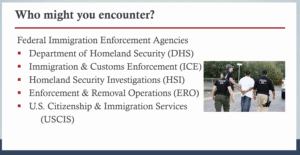
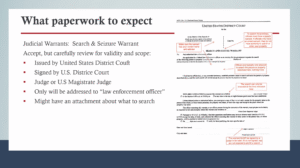
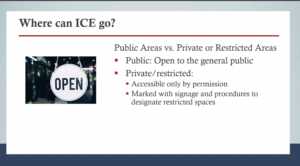
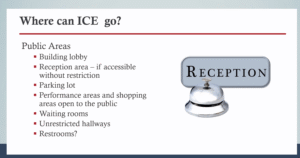
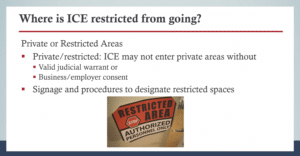
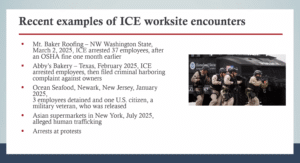
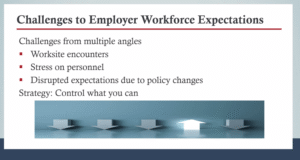
The recent ReCalibrate: Know the Facts presentation, co-hosted by WE’RE and the Seattle Metro Chamber, featuring immigration attorney Diane Butler and Director of Immigration Affairs and Port Commissioner Hamdi Mohamed, brought together business leaders to address the complex and shifting landscape of immigration law and its direct impact on Washington’s workforce. The session emphasized the critical role employers play in both protecting their employees and maintaining business continuity in the face of uncertainty. As one speaker noted, “the big takeaway is that you should feel prepared to protect your business and to protect your workforce and your customers. Knowing your rights, ensuring that your teams are informed is the best safeguard against fear, uncertainty, and these immigration laws and executive orders that are changing.”
A key theme throughout the discussion was preparation. Leaders were urged to train supervisors and frontline staff to understand protocols in case of contact with immigration authorities. This readiness not only ensures compliance but also builds confidence across the organization. “When you train your supervisors and frontline staff to understand what to do if approached by immigration authorities, that preparation builds confidence in your business,” participants were reminded. In addition, panelists encouraged businesses to consider partnering with other business and establishing ongoing relationships with immigration attorneys, noting that “immigration law is very complex, and it’s not just one training or one session that will help you fully grasp what is being said.”
The conversation also underscored the importance of collective action and transparency. Businesses were advised to join forces across industries to share resources, mitigate risks, and prevent costly mistakes. Equally essential is open communication with employees about company policies and stances. “Communicating openly with your employees about your company stance and what protocols are in place…can also help your employees know what it is that they’re working with,” the panel stressed. By taking clear, transparent positions, companies strengthen trust and reduce fear among their teams.
Speakers also emphasized that building trust is a long-term effort rooted in consistency. “Building trust in communities, consistency matters. When leaders show up repeatedly and not just in moments of crisis, I believe that sends a message,” one expert shared. Concrete steps such as providing translated materials, inviting relatable community leaders for lunch-and-learn sessions, and following through on promises all contribute to credibility.” As the panel noted, “communities lose trust when promises are made but are not delivered…small actions do make a difference. Respect for dignity matters.”
Finally, the session highlighted the broader social impact of immigration uncertainty, particularly the “chilling effect” experienced in communities. Even when policies are tied up in courts, fear can lead workers to skip shifts, leave jobs, or avoid essential services. Employers, as trusted messengers, have a responsibility to counteract these effects. As a speaker affirmed, “You can’t guarantee protection for anybody leaving the door, but you can make it clear what your policy and commitments are. I would encourage the business community to lean into that.” The event closed with a call to action for employers to stand visibly with immigrant workers, reinforcing inclusion.
Register and join us for our next recalibrate event on Thursday, October 30, at 9am at the Chamber.
August 2025