January 2026 Newsletter
This January newsletter invites WE’RE coalition members to step into 2026 with clarity and purpose, highlighting upcoming Roadshow sessions, a robust yearlong roadmap, and multiple opportunities to engage in learning, leadership development, and collective action. It underscores why health equity and student financial aid are urgent workforce and competitiveness issues, connecting data, policy, and lived experience to employer impact. We also spotlight the February Leadership Development Program cohort and reinforce a core message for the year ahead: lasting progress on equity comes from intentional systems, shared accountability, and employers moving forward together.
Step Into 2026: Join a WE’RE Roadshow to Hear What’s Ahead
Welcome back! We hope the new year is off to a strong start. As we step into 2026, we are excited to invite you to attend one of WE’RE’s Roadshows, a series of live, interactive sessions designed to give you a clear preview of the year ahead. During these one-hour conversations, we’ll walk through our 2026 roadmap, highlighting upcoming learning opportunities, leadership development cohorts, and key moments for engagement across the coalition. Most importantly, these sessions are a chance to connect: to ask questions, share what’s top of mind for your organization, and identify the touchpoints that will be most meaningful for you and your teams in the coming year.
If your schedule doesn’t allow you to join us live, we’ve got you covered. A short video overview will be available to help you stay connected and get a snapshot of the exciting opportunities ahead.
We’d love to have you join us, so please register for the session that works best for you below.
Roadshow Dates:
- Tuesday, January 13, 2026 | 2:30–3:30pm
- Wednesday, January 21, 2026 | 12:00–1:00pm
- Friday, January 30, 2026 | 2:30–3:30 pm
- Thursday, February 12, 2026 | 12:00–1:00pm
- Wednesday, February 18, 2026 | 2:30–3:30pm
- Tuesday, February 24, 2026 | 12:00–1:00pm
We look forward to connecting and kicking off the year together.
For questions, please reach out to Shirline@wearewere.org.
2026 IN MOTION
A Year of Learning, Leadership, and Action
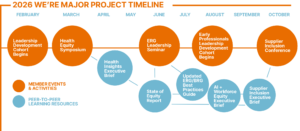
2026 is a pivotal year for We Are Washington Employers. This major project timeline serves as both a roadmap and an invitation that is grounded in a shared goal: strengthening Washington’s workplaces so people and businesses can thrive. It reflects a full year of learning, action, and shared accountability, translating employer commitment into practical strategies that improve workforce stability, performance, and long-term competitiveness.
From member convenings and leadership development cohorts to executive briefs that turn insight into action, each milestone is intentionally designed to move employers beyond statements of intent toward durable structures, practices, and cultures that deliver measurable results. This is not activity for activity’s sake. It is a deliberate sequence of opportunities to build leadership capability, align decisions with behavioral values, and address the real workforce challenges shaping affordability, retention, and productivity across Washington State.
The year begins with a strong focus on leadership and health equity, both issues with direct implications for talent retention and organizational resilience. In January, WE’RE and the Seattle Metro Chamber will co-host Recalibrate: Closing the Health Gaps Driving Women Out of the Workforce, a free virtual fireside chat examining how women’s health disparities influence workplace culture, turnover, and performance. This conversation sets the stage for February’s fourth Leadership Development Program cohort for mid-career professionals, equipping emerging leaders with the skills and perspective needed to lead through complexity. In March, The Architecture of Health Equity: Narratives, Policies, and Pathways Forward will invite employers to examine how systems, policies, and power dynamics shape access, opportunity, and outcomes in today’s workforce.
Throughout the year, the timeline highlights a series of touchpoints designed to connect learning with executive action. Leadership development cohorts for both early-career and seasoned professionals, ERG and BRG leadership seminars, and a Supplier Inclusion Conference create structured spaces where employers can learn from peers, stress-test approaches, and co-design solutions that strengthen their own organizations and the broader business environment.
In parallel, WE’RE will release a series of concise executive briefs focused on health equity, artificial intelligence, a refreshed ERG Playbook, workforce equity, and supplier inclusion. Each distilling data, research, and coalition insights into actionable guidance for senior leaders navigating an increasingly complex economic and policy landscape.
Underlying every milestone is a shared conviction: progress accelerates when employers move together. By convening across sectors, grounding decisions in data, and turning recommendations into action, WE’RE’s 2026 roadmap offers multiple entry points for employers at every stage of their journey. We invite you and your teams to engage fully, use this shared framework to align strategy with outcomes, and help build a Washington where workers, families, and businesses can plan for a more resilient and prosperous future.
JOIN US MARCH 20, 2026
Designing for Health Equity: Why Employers Can’t Afford to Wait
Health equity is no longer a “nice to have.” Recent analyses estimate that health inequities add about $320 billion dollars to United States health care spending each year and could exceed $1 trillion dollars annually by 2040 if left unaddressed. Costs that ultimately show up in employer premiums, lost productivity, and community instability. At the same time, global research from the World Health Organization finds that social determinants like housing, education, and income are shortening healthy life expectancy by as much as 33 years between countries, with the steepest losses falling on communities facing discrimination and marginalization. These are not abstract statistics; they describe the very workers, customers, and neighbors our organizations rely on every day.
In the United States, racial and gender inequities in health outcomes remain stark and deeply structural. Black Americans still experience higher overall mortality than white Americans, and Black women continue to face pregnancy-related death rates more than three times those of white women, even as overall maternal mortality has begun to decline. A 2024 Commonwealth Fund report shows that the United States has some of the sharpest income-based health disparities among high-income countries, with low‑income adults significantly more likely to skip needed care because of cost. From the report, “The U.S. continues to be in a class by itself in the underperformance of its health care sector. While the other nine countries differ in the details of their systems and in their performance on domains, unlike the U.S., they all have found a way to meet their residents’ most basic health care needs, including universal coverage.” For employers, these gaps translate into preventable absenteeism, presenteeism, turnover, and barriers to advancement that disproportionately affect workers of color, women, and low‑wage employees undermining both equity commitments and business strategy.
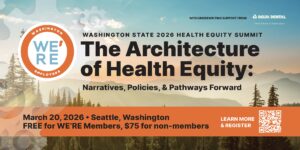
Yet there is also real opportunity: organizations that intentionally address health equity can improve retention, engagement, and trust while strengthening community relationships and long‑term resilience. Doing so requires more than isolated wellness programs; it means rethinking benefits design, scheduling, leave policies, data practices, and partnerships with health plans and community organizations, informed by the lived experiences of those most impacted. To support this shift, We Are Washington Employers is convening members for Architecture of Health Equity: Narratives, Policies, and Pathways Forward on March 20 for a dedicated space to connect the data to real stories, explore practical levers for change, and co‑design next steps with peers. Register today to join this conversation and help build workplaces where equitable health outcomes are the norm, not the exception.

WORKFORCE TALENT DEVELOPMENT
Why Restoring Student Aid Matters for Washington’s Future
Washington’s promise to students is at risk and employers have a critical role to play. Senate Bill 5828, now before the Washington State Legislature, would restore cuts to the Washington College Grant and College Bound Scholarship programs that disproportionately harm first-generation, low-income, and students of color, threatening both individual opportunity and our state’s long‑term talent pipeline. Recent funding reductions are already narrowing access to higher education, and coalition members have an opportunity for advocacy efforts like the Save Student Aid campaign, which is mobilizing students, families, and community leaders across Washington.
Recent coverage underscores the stakes. In a Seattle Times opinion piece, Pat Callans and Carolyn Kelly urge lawmakers to “keep the promise” to students by fully restoring scholarship funding, noting that these programs are among Washington’s most effective tools for expanding college access and social mobility. Local reporting from the Yakima Herald‑Republic and letters in The Spokesman‑Review describe how aid reductions are forcing students to cut credits, delay graduation, or leave college altogether, and how students from rural, low‑income, and Indigenous communities, are facing painful choices as they work to meet college expenses.
“These cuts in state assistance fall on students whom the state has pledged to support: two-thirds identify as students of color, most are women, and six in 10 are first-generation in college,” said Terri Standish-Kuon, President and CEO of Independent Colleges of Washington, an association of not-for-profit, private campuses in Washington state. “For the thousands of Washingtonians who will only go to a four-year campus if it is close to home, non-profit campuses make the difference between a degree and not going on for higher education. We do not want to see the rug pulled out from under Washingtonian students.”
For WE’RE coalition employers, this is not just an education issue, it’s a workforce, equity, and competitiveness issue. When financial aid falls short, the students who are pushed out of postsecondary pathways are disproportionately those our members are working hardest to hire, retain, and promote: Black, Latino, Indigenous, rural, first‑generation, and immigrant students who bring critical skills, languages, and lived experience to Washington’s economy. Cutting scholarships today means shrinking tomorrow’s pool of nurses, engineers, educators, technologists, and tradespeople, and undermining decades of progress on closing racial and regional opportunity gaps.
We invite coalition members to learn more about SB 5828, explore stories and data from the Save Student Aid campaign, and consider how your organization can advocate. Whether by contacting your legislators, amplifying student voices on social media, or sharing why robust financial aid is essential to your talent strategy. By standing with students and supporting full restoration of the Washington College Grant and College Bound Scholarship, employers can help ensure that cost is not a barrier to education, that Washington keeps its promise to the next generation, and that our state’s workforce remains diverse, innovative, and opportunity‑rich for years to come.
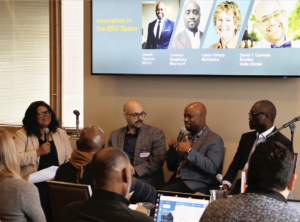
PEER TO PEER INSIGHTS
February 2026 Leadership Cohort
This February, WE’RE proudly launches its fourth Leadership Development Cohort, bringing together an exceptional group of faculty from leading Washington State business schools alongside our very own WERE Executive Director, Shirline Wilson. Designed for mid-career professionals seeking to strengthen their leadership, strategic thinking, and management skills, the program continues to build on its reputation for transforming professional growth and organizational impact. 4 seats remain open and are available on a first-come, first-served basis. Participants in previous cohorts consistently share how profoundly this program has enhanced their day-to-day leadership and mindset. One attorney remarked “with the exception of the negotiation module, every single skill taught here is essential to my professional work,” lamenting that neither their undergraduate or law degree offered such practical training. Many program graduates echo this sentiment, saying “they wish they’d learned these skills decades earlier.” This is truly a one of a kind program that brings the best of Washington’s talent together.
To learn more about the program, visit our Program Page, where you can explore faculty highlights, the 2026 curriculum, see the February-April schedule, and hear directly from last year’s participants. Whether you’re leading teams, navigating complex decisions, or preparing for your next career leap, this cohort offers the skills needed to excel. Also of note, in August 2026 a new LDP strand for early career professionals will be launched.
Systems, Not Just Sentiments: Building Racial Equity Through Structures, Relationships, and Shared Accountability
Many people assume racial inequity is primarily the result of individual beliefs or attitudes. In reality, the most powerful drivers of unequal outcomes are systems: policies, processes, and decision frameworks, built decades ago and still operating today (i.e. vendor qualification rules, insurance thresholds, and lengthy procurement processes). These practices often create high barriers for small, minority-owned businesses that may lack the capital or administrative capacity to compete. This system unintentionally concentrates resources among larger, established firms, perpetuating racial inequities in economic opportunity at a structural level. These structures can unintentionally reproduce disparities even when leaders are committed to fairness. Without examining how systems quietly shape opportunity, well-intentioned efforts can fall short of the impact organizations hope to make.
Awareness and training are valuable tools, but racial equity ultimately requires a deeper shift in how decisions are made and whose perspectives guide strategy. This work is not only structural; it is relational. Inequity can persist not because people lack knowledge, but because change creates uncertainty, disrupts familiar patterns, or challenges one’s sense of competence and identity. When leaders acknowledge these emotional dynamics with honesty and compassion, they create the psychological safety necessary for teams to engage meaningfully rather than defensively.
Measuring equity is one-way organizations demonstrate what they truly value. Tracking indicators such as promotion velocity, pay equity within role bands, sponsorship patterns, and disciplinary trends helps leaders understand where gaps exist and where change is needed. Yet metrics alone are not enough and are insufficient to tell the whole story. Some of the most important dimensions of equity – belonging, trust, safety, and dignity – cannot be captured in a dashboard. Effective organizations balance data with dialogue, pairing quantitative insights with human experiences to create a fuller, more nuanced picture of workplace equity.
Racial equity becomes durable when it is treated not as a time-bound initiative, but as an organizational competency, something developed over time through practice, feedback, and shared accountability. Structural redesign matters because systems shape outcomes. But cultural evolution matters just as much. When leaders cultivate norms of curiosity, transparency, and mutual respect, they create the conditions for equitable systems to take root and endure. The most sustainable progress emerges when both systems and culture move together, reinforcing an environment where all people can thrive.

RESOURCE HUB & UPCOMING EVENTS
Recalibrate: Closing the Health Gaps Driving Women Out the Workforce
On January 21, WE’RE and the Seattle Metro Chamber will co-host Recalibrate: Closing the Health Gaps Driving Women Out the Workforce, a free virtual fireside chat event designed to help employers better understand how women’s health disparities directly influence workplace culture, retention, and organizational performance. With new research from McKinsey showing that closing the women’s health gap could bring 137 million additional women into the global workforce by 2040, this conversation arrives at a critical moment for Washington employers seeking to strengthen team well-being and long-term stability.
January 2026