June Newsletter
This month’s newsletter takes on some of the most urgent conversations shaping our workplaces and communities. From the legal and business risks of scaling back DEI to the economic case for supplier inclusion, we’re sharing insights to help leaders navigate complexity with clarity.
Inside, you’ll find:
-
New research on the risks of retreating from DEI
-
Long-term strategies for supporting diverse suppliers and building inclusive economies
-
Updates on WE’RE’s fall task forces and the 2026 Leadership Development Program
-
A new Mindful Monday series launching in July
-
Coaching opportunities rooted in Integrated Attachment Theory
-
Details on our August 20 Recalibrate event focused on immigration and student visas
Read our articles to stay informed and engaged in shaping inclusive, forward-looking workplaces.

Retreating from DEI? The Hidden Risks May Be Bigger Than You Think
As political pressure mounts and some organizations scale back DEI efforts, new research from the Meltzer Center and Catalyst sounds the alarm: the cost of retreat may be far greater than the cost of action. Their June 2025 reports, Risks of Retreat and The Path Forward, reveal critical insights every business leader should know:
- Talent flight is real: Scaling back DEI leads to measurable declines in engagement, belonging, and retention, especially among younger generations and high-performing employees from underrepresented backgrounds.
- Reputation is on the line: Investors, consumers, and employees are watching. Public retreat from equity commitments increases reputational risk, erodes trust, and financial
- Legal clarity is emerging: These reports help differentiate between lawful inclusion efforts and riskier strategies, providing a roadmap for compliant, values-aligned action.
- The risks of retreat: organizations face the threat of a talent drain if they pull back from diversity, equity, and inclusion programs. More than three out of four employees (76%) say they are more likely to stay with their employer long term if their employer continues to support diversity, equity, and inclusion. Conversely, more than two out of every five employees (43%) say they will quit if their employer doesn’t continue to support DEI, with rates even higher among specific subgroups, including women, Gen Z, and millennial employees.
Leaders are encouraged to conduct a holistic risk assessment evaluating not only the legal landscape, but also the reputational, financial, and talent-related consequences of either maintaining or retreating from inclusion efforts. The report introduces a “legal and social risk matrix” to help executives make informed, balanced decisions. Second, rather than abandoning practices and programs, organizations should refine them for strategic impact. This includes shifting from preferential approaches to barrier-removal strategies, expanding access to opportunity-based cohorts, and focusing on inclusive infrastructure such as physical accessibility and flexible work policies over exclusionary benefits. Finally, the report underscores the importance of aligning communication with action. Leaders should “walk the talk” by embedding practices into core business functions like recruitment, mentorship, and budgeting, and “talk the walk” by clearly communicating strategy shifts to prevent perceptions of retreat. Done right, this approach protects organizational integrity, fosters trust, and strengthens long-term performance and financial impacts.
The Long Game: Rethinking Contracts, Procurement, and Supplier Inclusion
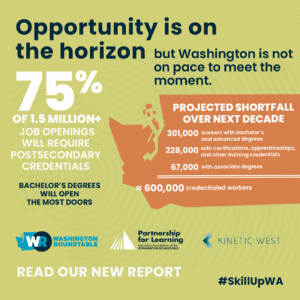
The Washington Roundtable’s “Skill Up for Our Future” report highlights the state’s need for over 1.5 million job openings by 2032, emphasizing the importance of inclusive economic strategies to meet this demand. “Washington has led the nation in 10-year GDP growth and ranks 9th in long-term job growth. Looking ahead, job growth in our state is projected at 12.8% through 2032, far surpassing the national average of 2.8%. Emerging trends could push growth here even higher.” The report underscores the necessity of aligning workforce development with diverse supplier engagement to ensure a robust and equitable economy. By investing in diverse suppliers and understanding the long-term nature of business growth, we can create a more resilient economic landscape.
At We Are Washington Employers (WE’RE), supplier engagement and diverse procurement are central to our mission. Advancing opportunities and supporting U.S. companies and domestic labor pools means reimagining who gets access to opportunity, capital, and contracts. This mindset requires that diverse suppliers are not just invited to the table but are given the sustained support needed to thrive. As we deepen our commitment to inclusive economic development, it’s essential to recognize the long, often nonlinear path, and patience it takes to build sustainable, community-rooted enterprises, as the typical trajectory of a new business is frequently misunderstood.
For many in year one of a new enterprise, businesses often operate at a loss, intentionally investing in infrastructure, team capacity, and market entry. By the second or third year, some businesses begin to break even, but stability remains fragile. It’s usually between years three and five, and sometimes as late as year seven, that businesses begin to see consistent revenue and profit. Understanding this developmental process is crucial for leaders, investors, and employees inside and outside the organization, especially those managing procurement decisions, contracts, and long-term partnerships.
When we apply pressure for immediate returns without regard for this reality, we inadvertently reinforce systems that punish new or undercapitalized enterprises, often disproportionately led by people of color. That’s why this business knowledge, the right mindset, collective understanding, and collaboration must be foundational to how we work. Shared investment, relationship-building, and long-range planning help mitigate risk and redistribute opportunity more equitably across our supply chains and industries.
As contracts and procurements are encouraged to become more localized, we have the power to shift not just who we buy from, but how we define success. By aligning our practices with the realities of business development, we can nurture ecosystems where diverse suppliers are not only included but are given the time, tools, and trust required to grow and generate lasting value. As the country emphasizes strengthening U.S. supplier bases and labor pools, we have a defined opportunity to support this vision.

WE’RE Taskforces Restarting This Fall: Join the Movement for Responsible Workforce Leadership and Supplier Engagement Professionals
This fall, WE’RE is excited to relaunch two essential task forces that advance inclusion through collaborative leadership and practical execution. The first, the Responsible Workforce Leadership Council, is focused on driving inclusion, leadership, and workforce transformation. This initiative offers HR, People, and Inclusion leaders a dedicated space to design and deliver tools, spotlight reports, and provide shared practices that build inclusive workplace cultures. Supporting Employee Resource Groups (ERGs) and connecting student internships are key components, with the taskforce setting measurable goals each year to maximize impact.
The second taskforce, Supplier Engagement Professionals, provides an ongoing platform for leaders to exchange insights, develop tools, and share best practices that drive greater investment in supplier and procurement inclusion. More relevant than ever, this group aligns with broader goals around U.S. supplier bases, labor pools, and diverse contracting investments. The taskforce fosters collaboration among multiple organizations, discusses revenue and contracting trends, offers reporting opportunities, facilitates connections, and supports progress toward building the broadest and most diverse supplier networks possible. Notably, it will lead the expansion and execution of the 2026 Supplier Conference, amplifying supplier inclusion efforts across industries.
WE’RE invites professional members to contact us if interested in participating in one of these taskforces this fall. Whether your focus is workforce transformation or supplier diversity, these groups offer valuable opportunities to collaborate, learn, and lead impactful change. Stay tuned for upcoming meeting dates and how you can get involved in shaping the future of inclusive workforce leadership and supplier engagement.

Mindful Monday Series
Coming July & August – A Summer Partnership with Trymaine Gaither
This summer, WE’RE is thrilled to partner with Trymaine Gaither to bring you a special Mindful Monday series throughout the months of July and August. This series is designed to help you start your week with intention, clarity, and focus. Whether you’re looking to enhance your resilience, strengthen your leadership skills, or cultivate more authentic connections with your team, Trymaine’s contributions will provide you with practical tools and mindfulness techniques to navigate the complexities of leadership and life with ease.
 Trymaine Gaither is the Special Assistant to the Provost for Access & Opportunity at Washington State University and founder of Heart Centered Consulting, LLC. One of fewer than 1,000 teachers worldwide certified to deliver both Mindfulness-Based Stress Reduction (MBSR) and Mindful Self-Compassion (MSC), he helps senior leaders cultivate focus, resilience, and authentic connection. Trymaine has delivered mindfulness programs to multinational teams across Europe; the Atlantic Coast Conference Student-Athletes Association; and organizations ranging from Fortune-500 firms to non-profits. He is a faculty affiliate with the Brown University Center for Mindfulness, supporting projects that bridge community-police divides through contemplative dialogue. An avid practitioner for more than a decade, Trymaine blends evidence-based mindfulness, intergroup dialogue, and compassionate leadership to foster workplace cultures of clarity, courage, and inclusion. He is passionate about helping leaders harness mindfulness to unlock their fullest potential.
Why does Mindfulness Matter? Mindfulness is more than a personal practice—it is an evidence-based tool that directly impacts performance and well-being in the workplace. Research consistently demonstrates that mindfulness can significantly reduce stress, improve focus, and enhance emotional regulation. Companies such as Google, Intel, and SAP have implemented mindfulness programs and reported measurable benefits including increased productivity, improved employee retention, and a 20-30% reduction in stress-related absenteeism.
In my own experience, integrating mindfulness into daily routines has been transformative. Initially drawn to mindfulness as a way to manage stress and enhance clarity, I discovered firsthand the profound benefits described in numerous studies. Regular mindfulness practice allowed me to approach complex tasks with greater ease and improved my resilience in high-pressure situations. My professional interactions and decision-making processes noticeably improved, as I became more present, thoughtful, and effective.
Self-compassion, a key component of mindfulness, is often misunderstood as indulgent or as potentially undermining motivation. However, research clearly refutes this misconception. Studies by Moore et al. (2018) highlight that harsh self-criticism, rather than self-compassion, undermines self-confidence and creates fear of failure. Conversely, self-compassion provides the supportive emotional environment necessary for sustained motivation and positive change. Dundas, Binder, Hansen and Stige (2017) reinforce this point, noting that individuals who practice self-compassion engage in healthier behaviors, from better eating habits to regular medical check-ups, driven by a genuine desire for well-being.
Incorporating mindfulness practices into leadership and executive training is especially beneficial, addressing critical issues such as burnout, executive turnover, and stakeholder relationships. A 2023 study published in the Journal of Occupational Health Psychology found that employees who regularly practiced mindfulness experienced significantly reduced levels of emotional exhaustion and depersonalization, two key indicators of burnout (Journal of Occupational Health Psychology, 2023). Mindfulness cultivates enhanced emotional intelligence and self-awareness, qualities that are essential for authentic, trusted leadership. Leaders trained in mindfulness are better equipped to navigate complex interpersonal dynamics, make informed and innovative decisions, and maintain composure under pressure, directly benefiting organizational outcomes.
Mindfulness matters because it is grounded in robust research and delivers tangible results, making it a powerful strategy for personal and professional development. Organizations and individuals who adopt mindfulness practices benefit not only from improved productivity and reduced stress but also from a deeper sense of fulfillment and purpose in their professional lives. Investing in mindfulness is investing in sustainable success and well-being.
Integrated Attachment Theory for the Workplace
This fall, WE’RE will be taking on limited clients for coaching sessions focused on Integrated Attachment Theory in the Workplace, a modern and interactive approach that bridges the science of human connection and team dynamics. Rooted in positive and humanistic psychology, Integrated Attachment Theory (IAT) explores how early relationship patterns influence adult behavior, communication, emotional regulation and processing. When applied to professional settings, IAT offers powerful insights into how individuals relate to authority, interact with peers, navigate conflict, build trust, and seek or avoid feedback. Each of these are core functions of effective workplace interactions.
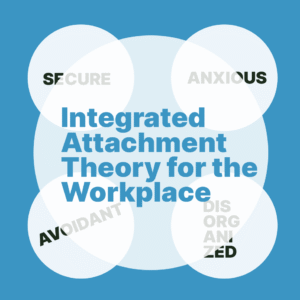
Understanding your own attachment style (whether secure, anxious, avoidant, or disorganized) can uncover patterns that shape your leadership presence, team interactions, and even responses to workplace stress or criticism. These personalized coaching sessions help professionals strengthen their emotional intelligence, identify triggers, cultivate healthier interpersonal dynamics and mindfulness. Whether you’re a people manager, executive leader, or early-career professional, mastering IAT in the workplace creates the conditions for improved collaboration, psychological safety, and resilience during turbulent times.
In our increasingly hybrid and high-stakes work environments, the ability to lead with clarity and compassion are essential. WE’RE’s new IAT coaching model supports participants in not just developing self-awareness but in translating that awareness into lasting thought and behavioral shifts. By learning to regulate emotional responses and model secure attachment behaviors, individuals foster trust, reduce miscommunication, and promote team wellbeing, with tangible professional returns. Want to learn more? Contact us!
Company Info Sessions for 2026 Leadership Development Program
The WE’RE team is excited to announce summer information sessions for the 2026 Leadership Development Program, a premier initiative designed to equip pairs of mentor and mentee professionals with the tools, strategies, and confidence to lead effectively in today’s diverse and rapidly evolving workplaces. As a signature program of WE’RE, LDP fosters leadership excellence through an engaging, cross-cultural learning experience that blends executive presence, mindfulness, emotional intelligence, negotiation, and mentorship.
Now entering its fourth year, LDP continues to grow in both impact and reach. Last year, participant enrollment surged by 75%, and company representation has expanded by 40%. The coming years cohort will be hosted by Seattle University with a refreshed curriculum that reflects the social, political, and leadership challenges of today. The 2026 program will run February through April over an 11-week period, with limited spots available. Member companies are encouraged to schedule an upcoming info session with lauren@employers4equity.org to explore how LDP can support their leadership pipeline before program registration opens this fall.
Explore the Facts Behind Immigration and Student Visas at August 20 Recalibrate Event
The Recalibrate: Know the Facts series returns on Wednesday, August 20, 2025, with a timely and thought-provoking session hosted at the Seattle Chamber of Commerce. As national discourse intensifies around immigration and student mobility, this session offers a vital opportunity for business, civic, non-profit, and education leaders to come together for a data-informed conversation on immigration policy, student visa challenges, and their direct impact on Washington’s workforce and economy.
This interactive event will feature a keynote presentation from the Office of Immigrant and Refugee Affairs. Participants will gain current insights into immigration trends, common misconceptions, and specific issues such as recent student visa restrictions and their implications for international enrollment. These trends have far-reaching consequences, particularly for Washington’s public colleges and universities, where international students provide tuition revenue that often helps offset long-term declines in state higher education funding. In 2023–2024 alone, international students contributed over $1 billion to Washington’s economy and supported roughly 11,000 local jobs.
Following the presentation, participants will engage in small-group tabletop discussions, encouraging cross-sector collaboration and fresh thinking around immigration’s impact. Topics will include the economic role of international students, changes in federal visa policy, and the responsibilities of employers, educators, and community leaders in supporting inclusive talent pipelines.
June 2025