May Newsletter

This month, we explore the evolving intersections of equity, workforce, and opportunity. As economic shifts and technological advancements continue to shape our systems, it’s critical to understand how these changes impact historically underrepresented communities.
In this issue, we examine:
-
Student Loan Changes and their disproportionate effects on marginalized populations.
-
Best Practices for Summer Internships, offering guidance for organizations looking to identify and support inclusive talent.
-
The growing role of Artificial Intelligence in the Workforce—and what inclusive implementation really means.
-
How Economic Instability Affects Healthcare Access for minority populations.
-
A Recap of our Recalibrate: Know the Facts session, plus a small preview of what’s to come at our next event on August 20, 2025 at 9:00am. Visit the event page for more information and to register for the August Recalibrate session.
Read our articles below as we continue to uplift equity-driven practices across sectors.
Student Loan Changes and Impact on Disproportionate Populations
Recent federal changes to student loan repayment and forgiveness programs have raised concerns about their disproportionate impact on Black, Latino, and low-income borrowers. Proposed legislation by lawmakers aim to overhaul the federal student loan system, including capping federal student loans and eliminating several Biden-era repayment and forgiveness programs. Critics argue that these changes could reduce affordability and accessibility to education, particularly for working families, veterans, and single parents.
The previous administration’s Saving on a Valuable Education (SAVE) plan, intended to lower payments and offer debt cancellation, is currently under court suspension due to lawsuits from Republican-led states. This legal uncertainty has left many borrowers, especially those from vulnerable populations, in a state of confusion and financial strain.
Income-driven repayment (IDR) plans have been a cornerstone in providing relief to struggling borrowers by setting payments based on income and family size. However, research indicates that awareness and enrollment in these plans are significantly lower among Hispanic or Latino borrowers compared to Black borrowers. This disparity suggests that while IDR plans offer potential relief, they are not reaching all segments of the population equally. As the landscape of student loan policies continues to evolve, it is crucial to prioritize inclusivity and support for those most affected by these changes.

Student Internships Over the Summer: Best Practices for Companies to Identify and Select Inclusive Interns
The value and role of internships in empowering marginalized future workforce participants.
As someone who has spent years connecting students across Washington with meaningful opportunities, I’ve seen firsthand how a well-structured internship program can serve as a powerful on-ramp to inclusive talent development that makes an impact far beyond the student experiences, often influencing and even launching entire career paths. For organizations who understand and appreciate the value of a diverse workforce, summer internships offer an important strategic and talent development starting point. To get the full value of that time you invest in interns make sure you have an intentional design that covers each phase of internship engagement. Successful internship engagements include a touch point through every phase of the internship time cycle: Recruitment, Internship Criteria, Project Design, Selection, Onboarding, Mentorship, and Post Internship Follow Up.
Recruitment: Start with outreach. Broaden your recruitment channels by partnering with university career centers, academic departments (such as Computer Science, Engineering, Psychology, or Marketing), and institutions that serve marginalized communities). Don’t overlook local community colleges, reaching out directly to Vice Presidents of Student Services can connect you with talented, motivated students who may be overlooked by traditional recruitment methods and who often lack access to established professional networks. WE’RE is happy to support introductions to many educators, and internship partners throughout the state.
Rethink your internship criteria for what is important about the role’s success. Do GPA requirements demonstrate what you are looking for, or technical experience requirements essential for what you need the intern to excel at? Does your process include requirements that may exclude capable candidates, particularly those who come from marginalized backgrounds. Good ideas can be to focus the internship experience on uncovering transferable skills such as problem-solving, communication, and curiosity. Use clear, inclusive language and ensure your application process is accessible, avoiding jargon, lengthy requirements, or unclear timelines.
Internship project design for professional and personal development experiences, not just output for a specific project objective. Once interns are on board, you have the opportunity to make an impact to show your work culture, what is important about what your firm does, and how their experience and interests can align to great career paths with your firm.
Pay your interns fairly or participate in an internship program partner who makes sure that interns are paid for their time, transportation costs, and sometimes housing costs.
Assign interns to mentors who can provide guidance, support, feedback and advocacy throughout their experience with your firm. Learn how to give great feedback: set up regular check-ins and create open channels for both giving and receiving input.
Internship follow up as an important aftercare step. An intern should hear from you after they have completed their project with your firm. Know when they are scheduled to graduate, and keep a door of communication open to ensure that if they are interested in a role at your firm that it is known that they were previously an intern.
These practices not only enhance the internship experience but also strengthen your organization’s long-term ability to attract, develop, and retain diverse talent. With thoughtful planning, internships can go beyond short-term work projects and become more powerful tools and catalysts to help you recruit a talented and diverse workforce.
Watch our Conversations 4 Equity webinar and our Pathways to Leadership interview with Alison Francis for more insights on building embedded learning internship programs.
Source
Artificial Intelligence, Workforce, and Inclusive Practices
As artificial intelligence becomes more deeply integrated into hiring, promotions, and performance evaluations, concerns are growing about its potential to reinforce existing workplace biases. Without intentional oversight, AI tools can replicate and amplify patterns of discrimination present in historical data leading to unequal outcomes for women, people of color, and other marginalized groups. A 2023 report by the U.S. Equal Employment Opportunity Commission emphasized that AI systems used in employment decisions must be carefully designed and monitored to prevent unlawful discrimination and to ensure compliance with civil rights laws.
Inclusive AI development begins with the data itself. Algorithms trained on skewed or incomplete datasets will inevitably reflect those gaps. To counter this, developers must use representative datasets, incorporate human oversight, and implement routine ethical audits to detect bias. The Brookings Institution notes that creating equitable AI systems requires diverse design teams, transparent processes, and governance frameworks that center equity from the outset. Ethical use of AI in the workplace isn’t just a technical challenge, it’s a leadership responsibility.
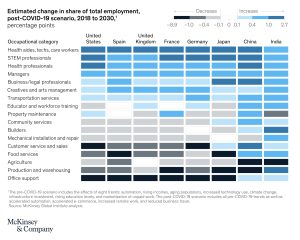
At the same time, as AI transforms the nature of work, reskilling efforts must prioritize access for underserved workers. Without equitable investment in digital literacy and job training, the digital divide will grow wider. According to McKinsey & Company, workers in low-wage occupations who are disproportionately women, Black, and Latino are at the highest risk of job displacement due to automation but often have the least access to reskilling programs. To build an inclusive workforce of the future, public and private sectors must partner to ensure reskilling pathways are accessible, affordable, and attuned to the needs of those most at risk of being left behind.
Source
Healthcare Impacts on Minority Populations During Economic Instability
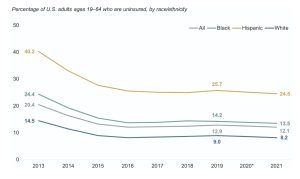
Economic instability marked by rising inflation, job losses, and recessions disproportionately affects the health and well-being of minority populations in the United States. Black, Latino, and Indigenous communities already face long standing disparities in healthcare access and outcomes, and these gaps only widen during times of economic stress. The pandemic, for instance, underscored how systemic inequities in employment, housing, and health access left many communities of color more vulnerable to both the virus and the economic fallout. According to the Kaiser Family Foundation, these groups were more likely to experience higher rates of uninsured status, food insecurity, and barriers to healthcare during the pandemic-induced recession.
One of the most pressing issues during economic downturns is the reduction in employer-sponsored health coverage, which disproportionately impacts communities of color. A report by the Commonwealth Fund found that during economic contractions, Latinx and Black workers are more likely to lose job-based insurance and less likely to have access to affordable alternatives. These gaps in coverage translate into delayed care, unaddressed chronic conditions, and decreased use of preventive services, further entrenching poor health outcomes. Indigenous populations, particularly those living in rural or under served areas, also experience unique challenges such as underfunded tribal health systems and limited access to specialty care.
As noted by the Centers for Disease Control and Prevention, culturally tailored health initiatives are crucial in promoting health equity. Community-based health strategies should also be a cornerstone of response efforts during economic instability. Investing in local clinics, mobile health units, and partnerships with trusted community organizations can improve access to care where traditional systems fall short. These interventions not only offer immediate relief but also build long-term resilience in communities that are often the hardest hit.
Recap on May 2025’s Recalibrate: Know the Facts.
Next Event Coming August 20
WE’RE and the Seattle Chamber of Commerce co-hosted Recalibrate: Know the Facts with a timely and energizing panel focused on navigating organizational and societal shifts. Held in a packed room, the event was moderated by Shirline Wilson and featured panelists including Kati Sills, Paj Nandi, and Ellen Austin Hall, three dynamic leaders who offered deeply reflective insights amid political, social, and institutional uncertainty.
The conversation encouraged attendees to lean into complexity, resist passivity, and hold tight to their principles and values. The conversation began with the grounding that executive orders are not laws and apply to federal agencies, a representative from the attorney general’s office shared.
Kati further grounded the discussion in the power of curiosity and resilience. “No one can legislate against curiosity,” she reminded the audience, advocating for programs that are not only well-resourced but clearly articulated in terms of impact and value. Her message was clear: even in turbulent times, leaders can and must create strategies that are built to last, ones that anticipate resistance but stay rooted in purpose.
Paj offered a compelling view of how language, policy, and mindset shape the path forward. “Words matter,” he said, emphasizing how narratives can either unify or divide. He spoke about the administration’s use of the “flood zone” overwhelming public discourse with confusion and challenged participants to choose how they respond. “Policy drives action,” he said. “We must collect the data to drive the policy to receive the grants.” At the heart of his message was the belief that a just society is a peaceful one, and that is grounded in human connection; seeing, hearing, where belonging is foundational to any lasting progress.
Ellen closed the conversation with a powerful warning about complacency. Drawing on the work of historian Timothy Snyder, she urged attendees to consider the phrase “do not obey in advance,” a reference to how societies can erode democratic principles by self-censoring before rules even change. “We do not want to undermine our entire constitutional order,” she stated. Her message underscored the urgency of vigilance and moral clarity in the face of shifting norms.
Together, the panelists painted a picture of not just the challenges ahead, but the values and actions required to meet them. We extend our heartfelt thanks to our incredible panelists for their candor, courage, and clarity, and to the engaged audience members whose thoughtful questions deepened the conversation and reminded us of the power of collective inquiry.
Recalibrate: Know the Facts was a powerful reminder that we are not alone in this work and that shared understanding is a vital foundation for forward movement. We hope you’ll join us for the next installment of the Recalibrate series on August 20, 2025, at 9:00am, as we continue to unpack the evolving landscape. Please visit the event page for more information and to register for August’s Recalibrate session.
May 2025